
🐶 Overweight & Obese Dogs — What Every Dog Owner Should Know
Keeping your dog at a healthy weight is more than just about looks — it’s about longevity, comfort, and quality of life. Just like humans, dogs can gain weight when calories in exceed calories used through activity. Unfortunately, extra pounds in dogs are far more common than many pet parents realize — and the health consequences can be serious.
📈 The Dog Obesity Epidemic
A growing number of dogs are now classified as overweight or obese, with estimates in 2023 showing approximately 50% to 60% of dogs in Canada are considered overweight or obese, according to the Canadian Veterinary Medical Association.
This isn’t merely cosmetic — excess weight can contribute to lifelong health problems, including:
Joint pain and arthritis
Reduced stamina and heat intolerance
Increased risk of diabetes
Heart and respiratory issues
Shortened lifespan
Remember - dog’s are athlete’s, they should have an athletic build! Being proactive about your dog’s weight can dramatically improve their comfort and reduce veterinary costs over time.
📊 How to Tell If Your Dog Is Underweight, Ideal, or Overweight
Veterinarians use a Body Condition Score (BCS) — typically on a 1 to 9 scale — to assess whether a dog’s weight is healthy. This score takes into account visual shape and how the dog feels under your hands.
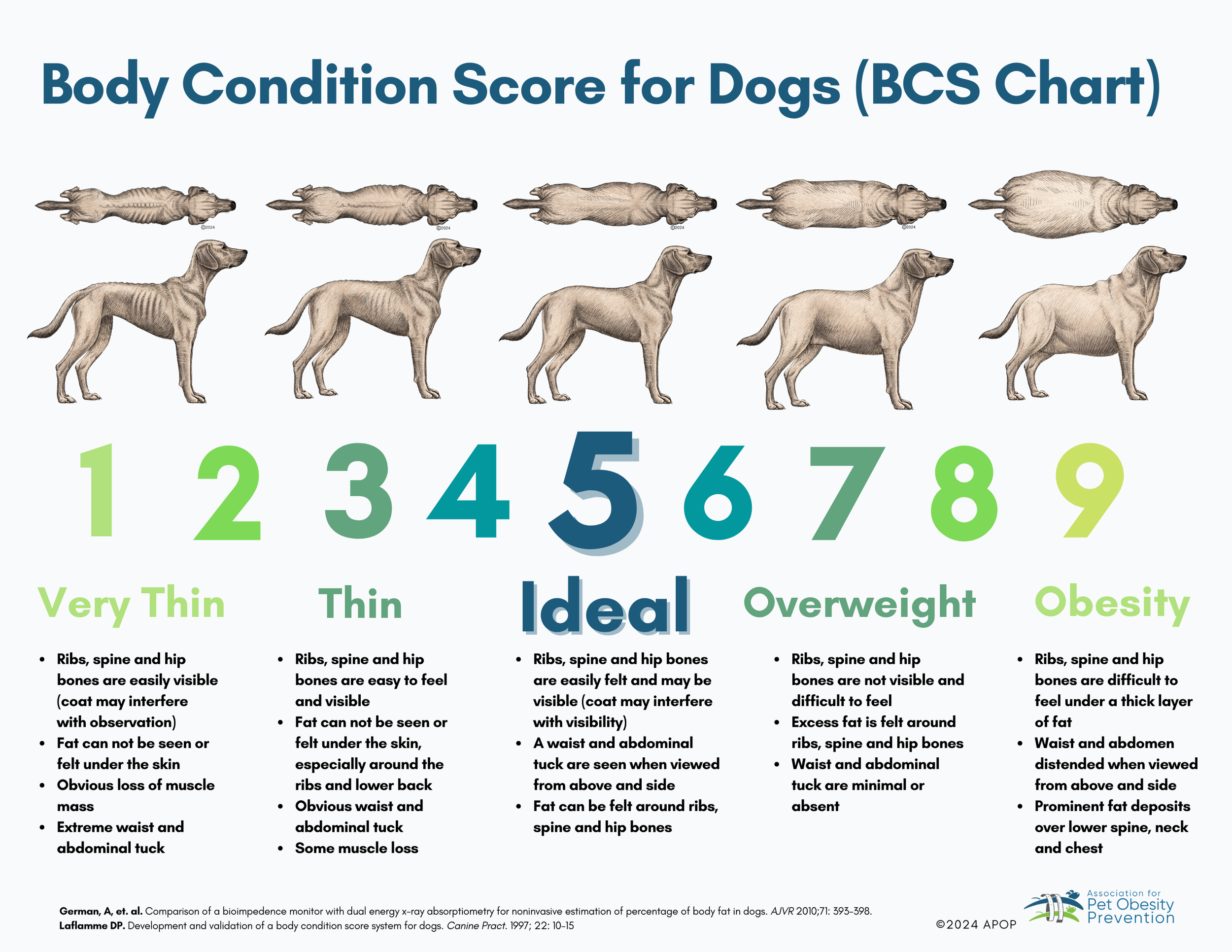
Body Condition Score for Dogs (BCS Chart)
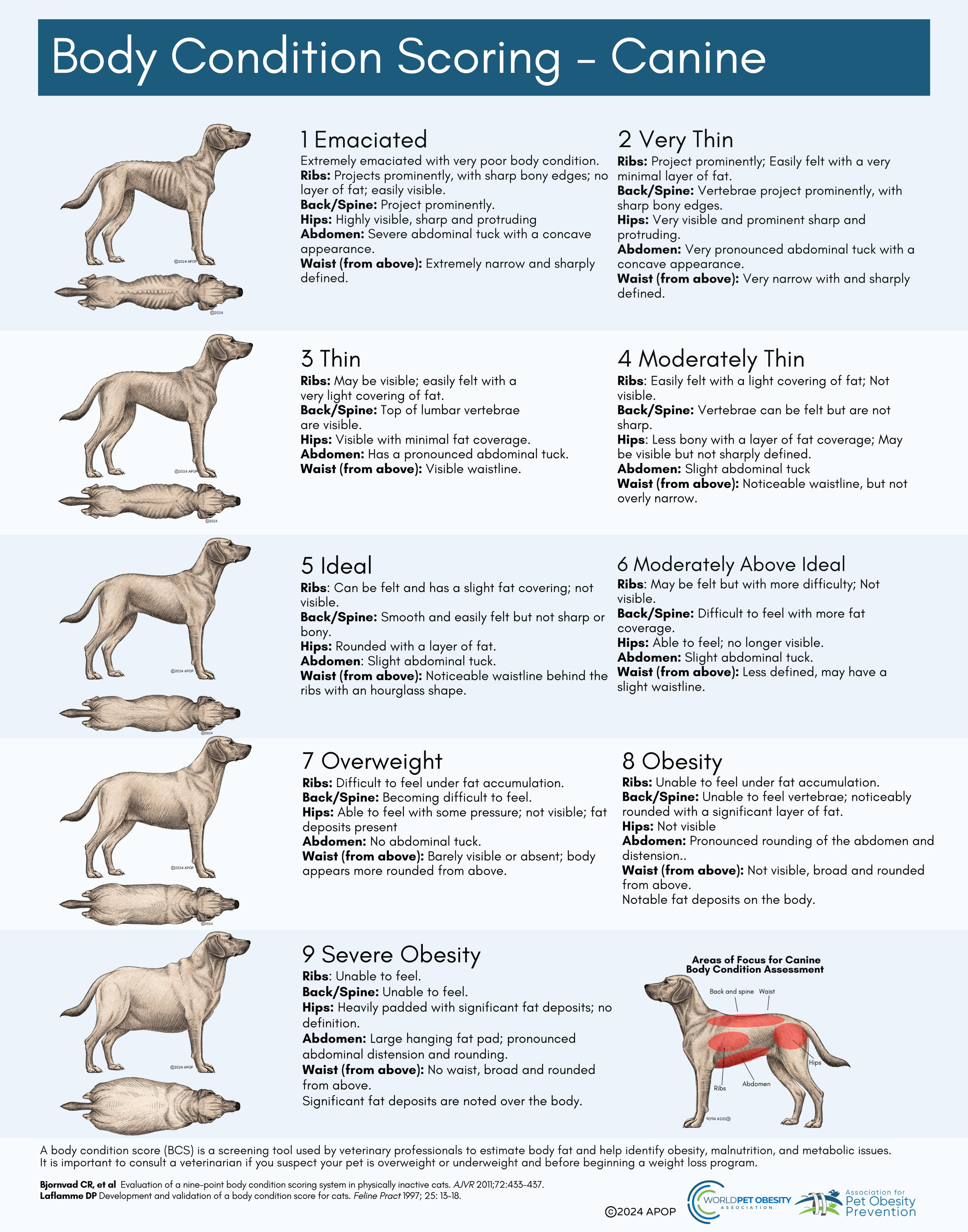
Body Condition Scoring - Canine
Here’s a simplified take:
🐕 Body Condition Score Overview
Underweight (BCS 1–3)
Ribs, spine, and hips may be visible
Very little fat cover
No noticeable waist shape
Ideal Weight (BCS 4–5)
Ribs easily felt without pressing hard
Waist visible from above
Gentle abdominal tuck from the side
Overweight (BCS 6–7)
Ribs harder to feel under fat
Waist barely visible
Little abdominal tuck
Obese (BCS 8–9)
Ribs very difficult to feel
No visible waist
Excess fat deposits around chest and abdomen
(Visuals above help you match your dog’s shape to these categories)
🐾 Why Excess Weight Matters
Just a little extra fat can increase strain on your dog’s body. Whether it’s extra pressure on joints or changes in blood sugar regulation, carrying too many pounds can:
Exacerbate arthritis
Increase risk of endocrine diseases
Impair mobility
Shorten life expectancy
Weight isn’t just a number on a scale — it’s a health signal.
🍖 Common Causes of Weight Gain in Dogs
Dogs don’t always gain weight for the same reasons — but these are some common contributors:
✔ Overfeeding
Too many treats or table scraps
Feeding amounts above recommended portions
Free feeding (leaving your dogs full bowl accessible at all times)
✔ Inactivity
Less play or walks means fewer calories burned.
✔ Metabolism & Age
Older dogs burn calories more slowly.
✔ Breed & Genetics
Some breeds are more food motivated or prone to gain weight than others.
Awareness of these factors helps owners adjust both diet and activity effectively.
🦴 How to Help Your Dog Reach a Healthy Weight
🎯 1. Evaluate Calories
Count all calories — including treats — and measure food portions accurately.
🐾 2. Increase Activity
Daily walks, play sessions, and interactive toys help burn calories and enrich your dog’s life. Here at Aloha K9 we provide space rental in the winter to burn some energy and calories indoors, and we also have a Slatmill you can rent - think dog powered treadmill!
🍖 3. Choose Nutritious Food
High-quality dog food with appropriate protein and fiber can support lean muscle and satiety. A raw diet is always my go too. I weigh each meal and can add nutritious fruits, vegetables and probiotics as I choose.
🩺 4. Work with a Vet
Especially for dogs scored as severely overweight or underweight, a veterinarian can help create a safe, individualized weight plan.
📌 Final Thoughts
Weight management isn’t about perfection — it’s about progress and awareness. By regularly checking your dog’s body condition, adjusting feeding habits, and keeping them active, you give your dog the best chance at a long, healthy, joyful life.
If you’re ever in doubt about your dog’s condition, a veterinary visit is the best way to get professional guidance tailored to your pup’s needs.